← Post List / Music Log / 2026-11-16
Learning as Self-Taught, the Hard Way
How a self-taught guitarist is tackling formal music theory, harmony, and notation through three essential Arnold Schönberg books.
Everyone is born with a particular interest in something—it doesn't matter if you're naturally good at it or not. Mine is music. I really like everything about it, from orchestral music to electro-pop that uses Vocaloid or vocoders; from how guitars and basses are built by luthiers to how songs are recorded.
Having said that, I've always loved electric guitars and taught myself how to play them. Later on, I joined the band at a church and ended up learning basically every instrument a church needs during service.
That experience woke up an interest in studying music formally. I made a few attempts, but failed miserably because my English level wasn't great at the time (and honestly, I still have plenty of room to improve).
Diving Into Formal Music Theory
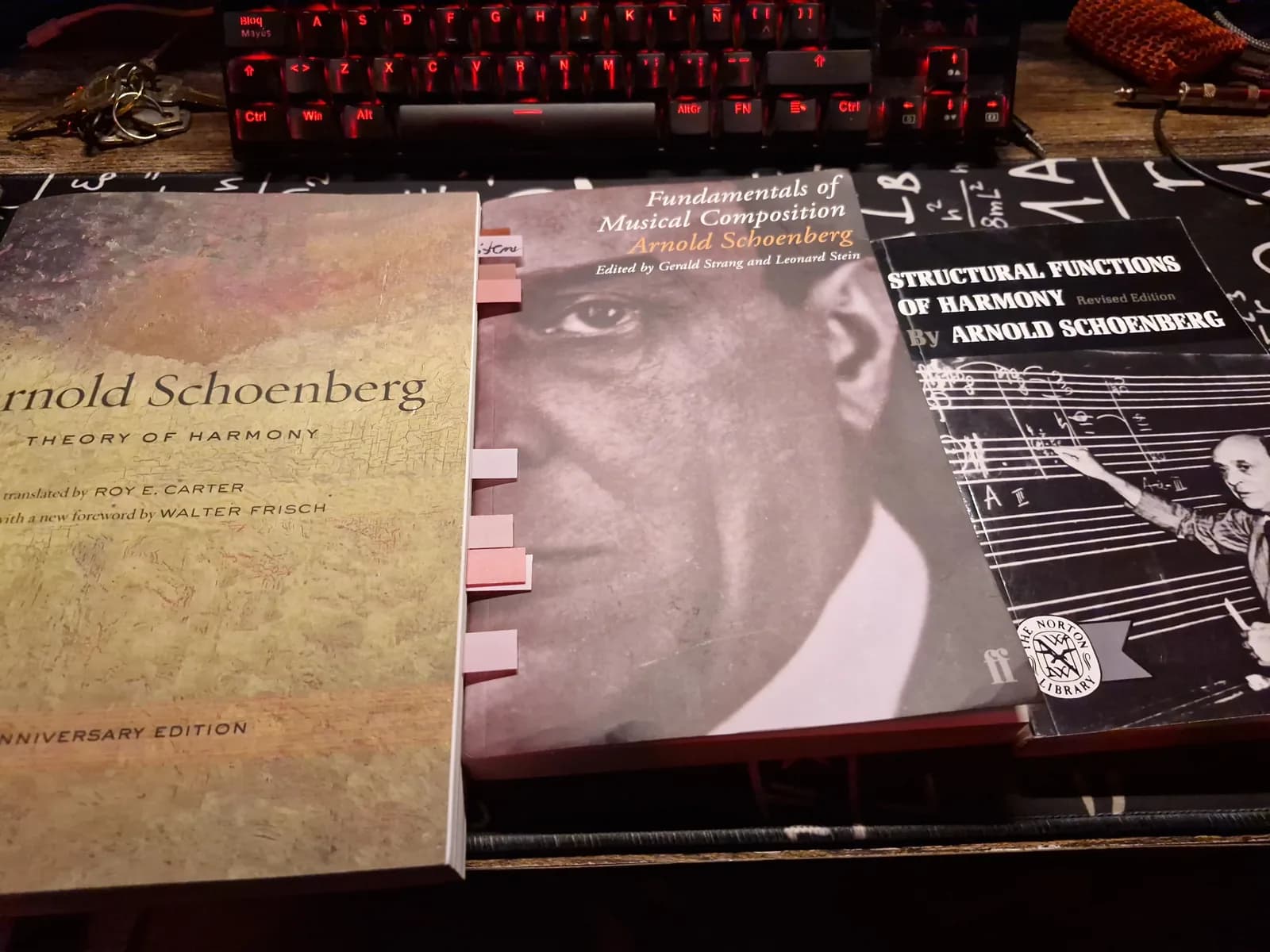
Eventually, I reached an acceptable level of English and started looking for music books to learn properly. These are the three books I'm reading right now—and recommend—all by the same author and musician, Arnold Schönberg:
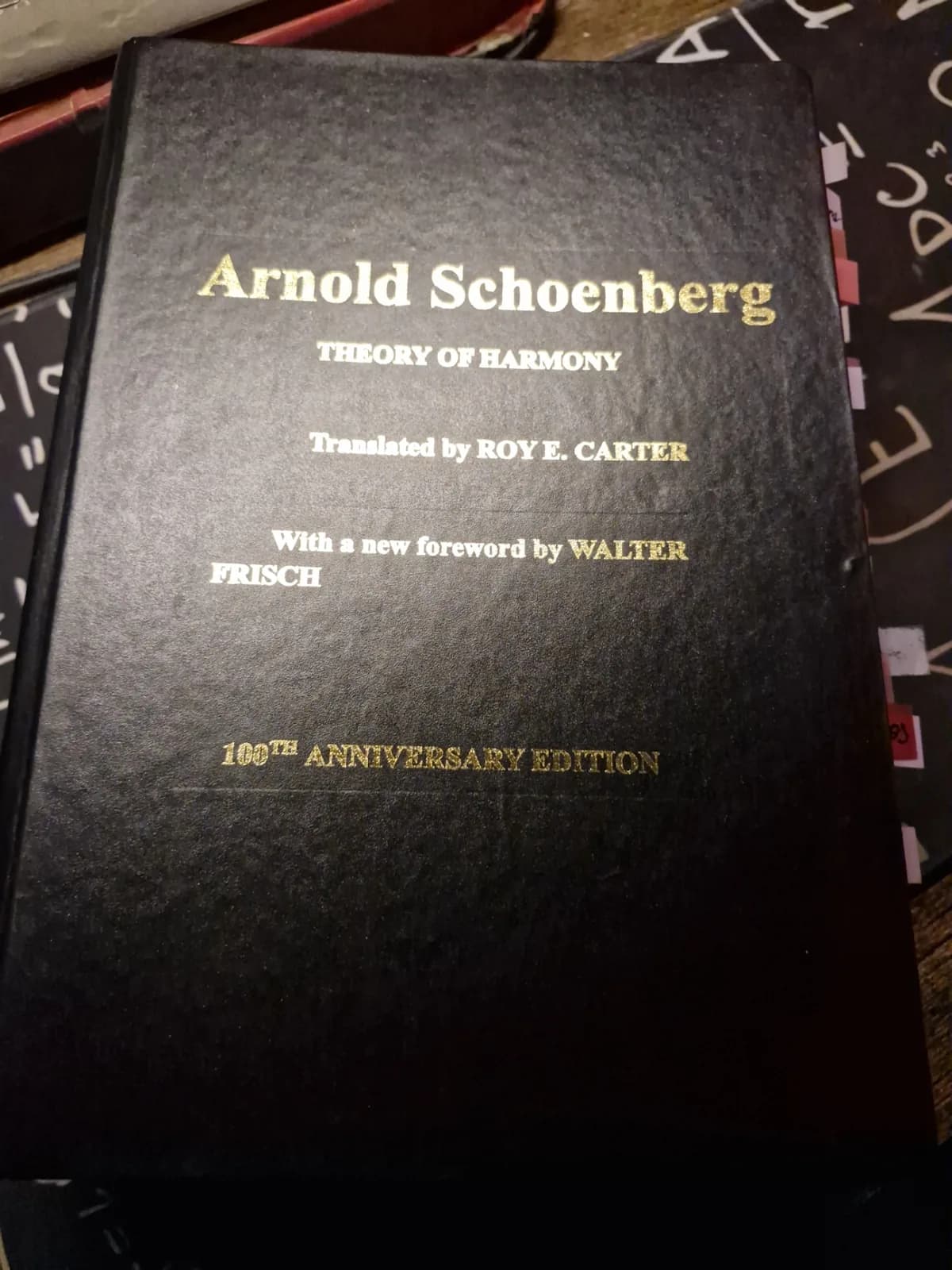
Theory of Harmony (100th Year Edition)
This book is incredibly good! It explains the beginnings of Western music by showing how temperaments and ecclesiastical scales worked, and uses that as a foundation to explain the dos and don'ts of classical music—introducing new techniques and material chapter by chapter.
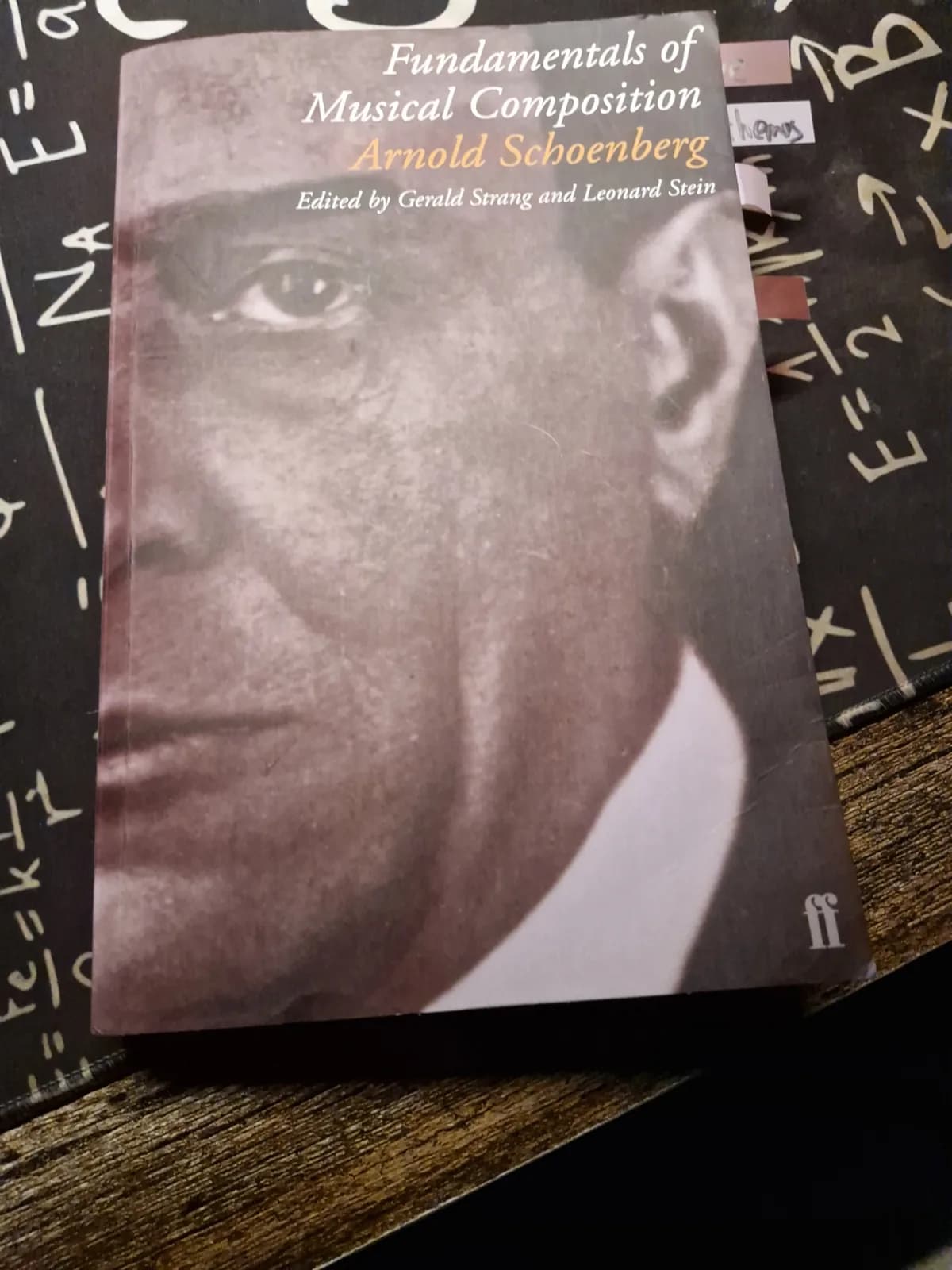
Fundamentals of Musical Composition
When we listen to a piece or a song, we tend to appreciate it as a single unit. This book breaks down the ways music can be built and "varied" to feel dynamic, introducing technical terms and defending a clear framework on how to use them.
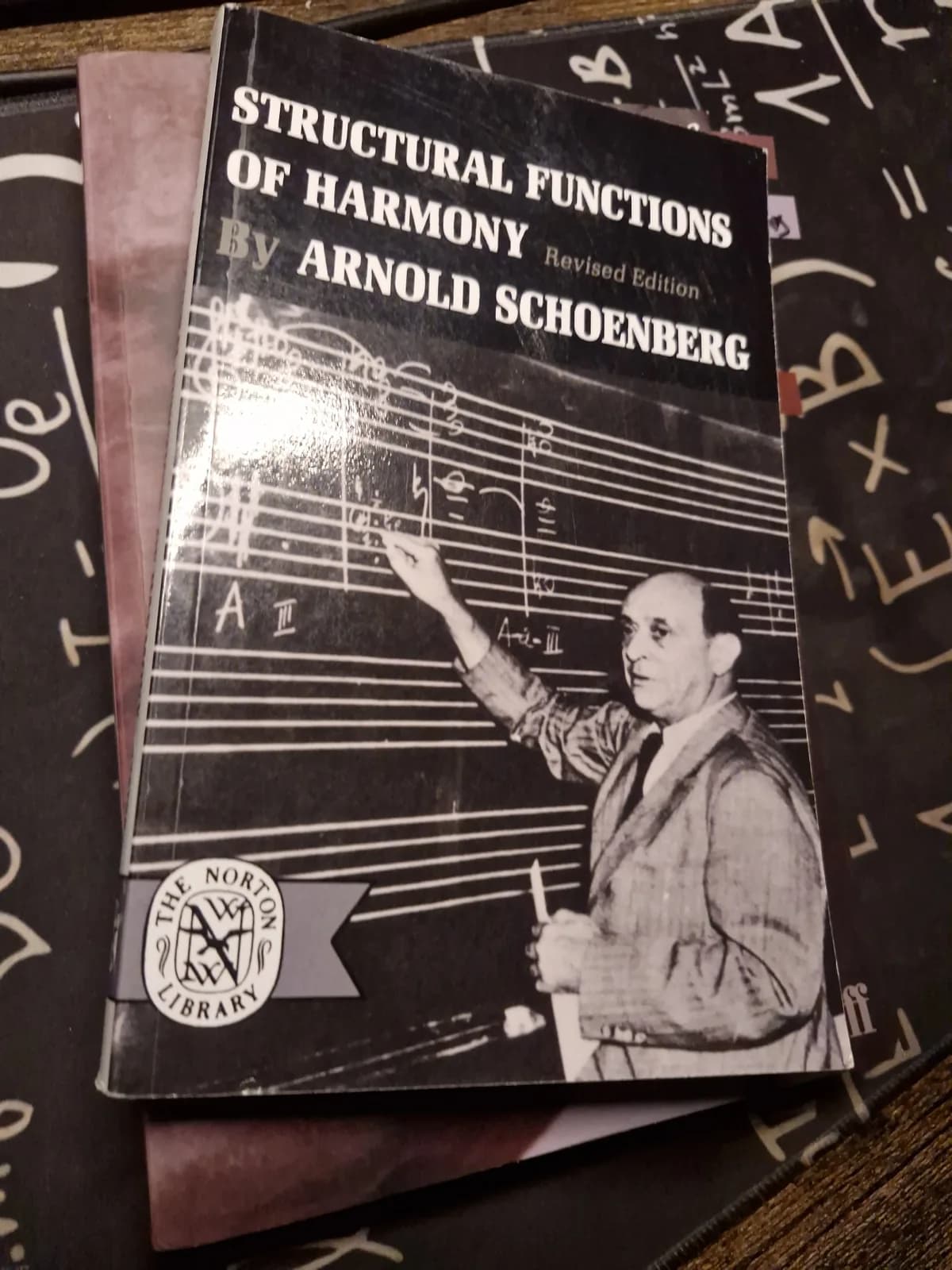
Structural Functions of Harmony
I'm going to be completely honest with you on this one: this book is out of my current league. It was conceived by Schönberg to reinforce the knowledge of his students. It's the smallest of the three books, yet so dense that it's almost impossible for me (so far) to understand a single thing—modal regions, substitutions, vagrant chords, and so on.
My Advice If You're Starting Out
My recommendation here is to lose the fear of these books. Read them with a few highlighters, take notes on every term, and lean on online and local tools to work through the exercises: a metronome, scoring software (like Dorico), and a small MIDI keyboard.
Drafted from the author's original notes and experience, structured and localized with AI assistance.